





Preventing Malaria during Pregnancy

Malaria can be fatal during pregnancy. Each year up to 200,000 newborn babies die unnecessarily from this totally preventable disease.
Pregnancy reduces a women’s immunity to malaria, so it is important to try and prevent exposure to the disease. If malaria symptoms do appear, it’s vital that correct diagnosis and prompt action is taken by medical teams. Malaria can lead to severe illness for the Mother- sometimes death. Her unborn child is at even greater risk. Infected with malaria from the Mother’s placenta, babies are likely to be seriously ill, miscarried, premature, or stillborn.
There are several ways to prevent women and their babies from being affected by malaria. By sleeping under insecticide treated nets, there is less risk of infectious mosquito bites. Anti-malarial medication can safely be given to pregnant women to prevent them contracting malaria, and passing it onto their unborn child. Finally, by teaching families to recognise the symptoms of malaria, they are able to seek proper medical help if they do fall ill.
Maxwell and Fanny Maumbo know all too well how devastating malaria can be. Fanny suffered a miscarriage of her first child in the late stages of pregnancy. Her second child, Bridget, survived the pregnancy but was diagnosed with malaria just days after being born. Baby Bridget was taken to the health clinic every week, to treat the hallucinations and other malaria symptoms she was suffering.
When Fanny was pregnant with their third child, both she and Maxwell lived in fear for the baby’s life. After nine months, Fanny miscarried again. Life had become very difficult both emotionally and financially for the family, with regular, expensive, health care needed for Bridget and Fanny, while Maxwell was unable to work whilst caring for his sick family.
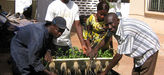
Concern Universal met the Maumbo family in 2008. We were in the area to educate communities on the importance of identifying and treating malaria. Individuals were selected to receive training to help educate other communities on malaria. Maxwell Maumbo was one of those on the ‘Village Health Committee’ in Nazombe, Phalombe.
Once Maxwell had received the training, he realised that Fanny had been suffering from malaria, and he now knew how to help her.
“We were taught how to recognise malaria, knew to rush to hospital within 24 hours of the onset of fever, to make sure prescribed medication is taken properly and how important it is to attend the ante-natal clinic; where pregnant women are given anti-malarial drugs during pregnancy. We were provided with insecticide treated nets, and taught to sleep under them every night.”
When Fanny fell pregnant with her fourth child, she received anti-malarial drugs. She suffered no malaria symptoms and gave birth to a healthy baby boy, called Dennis.